





Your customers open iPhones dozens of times daily, and trusted apps shape brand loyalty. As a leading iOS app development agency, we craft Apple experiences that turn attention into revenue.
Reaching an Apple audience takes more than porting an Android product. It takes a partner who understands Human Interface Guidelines, App Store ranking behaviour, and the way iPhone and iPad users judge polish within seconds. Our iOS app development services cover consumer-facing products, enterprise workflow apps, subscription platforms, and iPad-first tools. You get research-led planning, Swift and SwiftUI production, App Store submission handling, and long-tail iteration once real users arrive. You also get a documented delivery record with named clients across banking, healthcare, retail, and manufacturing, so enterprises trust us as a certified iPhone application development company delivering customised outcomes.
Partner with the best iOS app development firm today.
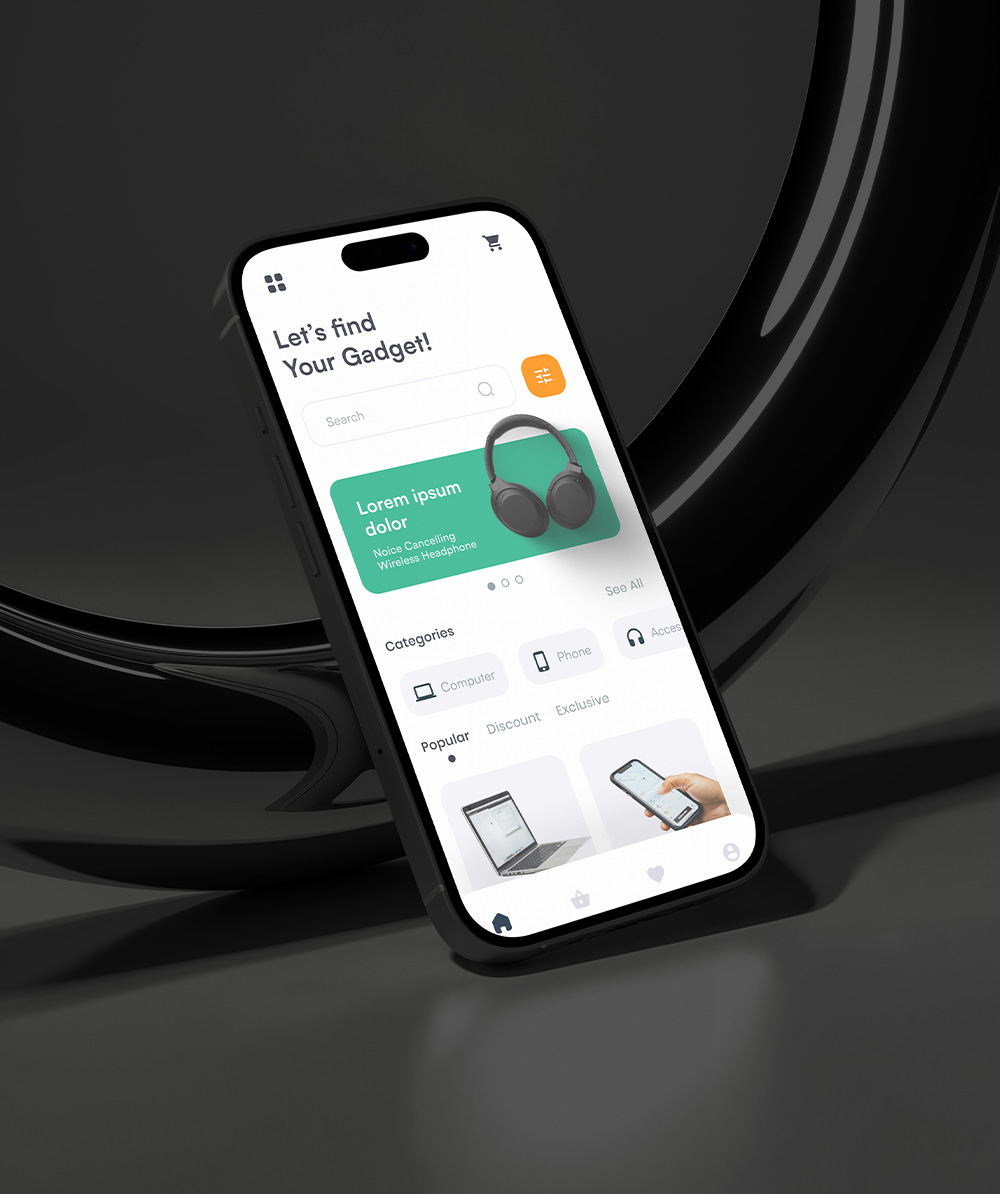
Every product starts with primary interviews, jobs-to-be-done mapping, and competitor teardown across the App Store. You receive a validated feature list before a single Swift file is written, so your investment targets the moments that actually convert Apple users into paying users.
Our product team runs structured ideation sprints, converting research into user flows, information architecture, and clickable prototypes. You review real navigation on a device inside two weeks, which shortens executive alignment and lets stakeholders react to something tangible instead of slide decks.
We track WWDC releases, iOS version adoption curves, subscription economy shifts, and category-specific behaviour on Apple platforms. Our custom iOS app development services fold these signals into your roadmap, so your product ships aligned to what next year's iPhone owners will expect, not last year's patterns.
Detailed journey artefacts document each customer touchpoint, from App Store listing to push notification response and re-engagement moments. Unlike generic iphone application development firms, we quantify friction with heuristic scores and later with real analytics, which lets your team prioritise fixes by revenue impact instead of hunches.
Pixel discipline, accessibility conformance, motion timing, and performance budgets frame every screen. Our ios application development services enforce this standard on every release, so Apple reviewers approve faster and users reward polish with higher retention and better ratings that compound into organic App Store visibility.
Your brand voice, typography, colour system, and tone of interaction are translated into the Apple design language without losing identity. As an established ios app development agency in India, we keep marketing, design, and product on one shared reference, which prevents the drift that usually appears after the second release cycle.
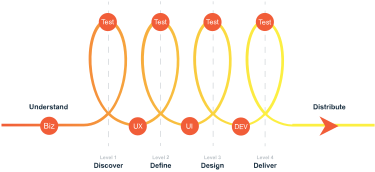
You meet the product lead and analyst who will own your account. We audit your goals, competitor apps, target personas, and technical starting point, then hand you a documented brief and success metrics.
STAKEHOLDER INTERVIEW
COMPETITOR AUDIT
PERSONA MAPPING
METRIC FRAMEWORK
TECH REVIEW
RISK LOG
KPI SHEET
BRIEF DOC
A senior strategist shapes your roadmap, monetisation model, App Store positioning, and release cadence. You leave this stage with a signed-off product plan that removes ambiguity for every downstream team.
ROADMAP
MONETISATION PLAN
STORE POSITIONING
RELEASE CADENCE
FEATURE PRIORITY
SCOPE LOCK
RESOURCE PLAN
TIMELINE
Product designers translate the strategy into wireframes, motion studies, and interactive prototypes. You test them with real Apple users, so decisions arrive with evidence before production begins.
WIREFRAMES
USER FLOWS
MOTION STUDY
PROTOTYPE
USABILITY TEST
DESIGN SYSTEM
ACCESSIBILITY
ICON SET
Visual designers produce final screens against Human Interface Guidelines, dark mode variants, and Dynamic Type behaviour. You approve one polished reference before code, cutting rework and shortening total delivery time.
HIG COMPLIANCE
DARK MODE
DYNAMIC TYPE
COLOUR SYSTEM
TYPOGRAPHY
HAPTICS
MICRO-INTERACTIONS
HANDOFF
Swift and SwiftUI developers produce your product against sprint checkpoints, with QA running in parallel. You review demos every fortnight and see the app on TestFlight from the earliest stable release forward.
SWIFT
SWIFTUI
XCODE
TESTFLIGHT
CI CD
UNIT TESTS
API INTEGRATION
CODE REVIEW
We handle App Store submission, review responses, phased rollout, and post-launch analytics setup. Your team receives crash telemetry, retention dashboards, and a written optimisation plan tied to your original success metrics.
STORE SUBMISSION
REVIEW LIAISON
PHASED ROLLOUT
ANALYTICS
CRASH TELEMETRY
RETENTION DASH
ASO PLAN
ITERATION LOG
An App Store product is a revenue channel first and a piece of software second, and every rating point on your listing is money on the table. Our iPhone application development services span consumer launches, enterprise field apps, healthcare compliance products, and subscription platforms shipped to global audiences. Our roster runs from early-stage founders shipping their first release to Fortune 500 organisations rebuilding legacy workflows, with named clients including Panasonic, Yamaha, Airtel, Fortis Healthcare, Reliance, Dr. Reddy's, and Godrej. Request our portfolio and you receive a curated set of case studies, App Store links, and measured outcome data from a proven iPhone app development company in India.
An iOS app development company owns the full lifecycle of your Apple-platform product. That starts with market research, competitor teardown, and a validated feature list, then moves through user experience design, Swift or SwiftUI production, backend integration, quality testing, and App Store submission. After launch you receive analytics setup, crash telemetry, review response support, and iteration sprints tied to real user data. A good partner also handles Apple review liaison, phased rollouts, and long-term maintenance across future iOS versions. In short, you get one accountable team from validated idea to sustained App Store performance, instead of stitching together freelancers.
Swift is Apple’s modern language and has been the default choice for new products for several years. It offers safer memory handling, stronger type checking, faster compilation, and much cleaner syntax than Objective-C. SwiftUI, built on top of Swift, lets designers and developers move faster on adaptive layouts across iPhone, iPad, Apple Watch, and Mac. Objective-C is still used for maintaining legacy code, but starting a new product on it in the current era means paying more for slower future changes. Most credible iPhone application development firms recommend Swift and SwiftUI for any product where you plan to add features across multiple years.
Typical timelines fall into three brackets. A focused MVP with four to six primary screens and a simple backend usually reaches the App Store in eight to twelve weeks. A mid-scale product with payments, third-party integrations, and admin tooling generally takes fourteen to twenty weeks. An enterprise platform with SSO, offline sync, HIPAA or similar compliance, and iPad optimisation can extend to twenty-four weeks or beyond. What compresses time is a signed-off scope, decisive stakeholders, and access to real users for testing. What lengthens time is mid-sprint scope changes and delayed feedback cycles.
Cost depends on scope, integrations, compliance load, and design complexity, not on a fixed price sheet. In India, a lean single-feature product usually starts in the low lakhs. A production-ready consumer app with payments, notifications, and analytics generally sits in the mid-to-upper lakhs. Enterprise platforms with heavy backend, security review, and iPad support cross into higher brackets. Comparable iOS app development services in India remain meaningfully more cost-efficient than equivalent delivery from North America or Western Europe, and the quality gap has closed sharply. You should request a written estimate mapped to a documented scope.
App Store Optimisation, or ASO, is the discipline of improving discovery and conversion on the App Store itself. It covers title and subtitle wording, keyword field selection, screenshot design, preview video, ratings management, and localisation. Strong ASO can lift organic installs meaningfully without extra ad spend. It matters because App Store search drives a large share of new installs for most categories, and a listing with weak screenshots or poor first ratings loses users before they ever open your product. Any competent iOS delivery partner should include ASO planning inside the launch checklist.
Native Swift gives you the deepest access to Apple APIs, the fastest performance, the best animation quality, and the smoothest handling of new iOS features on launch day. Cross-platform frameworks let you share code with Android, which lowers total cost when both platforms matter equally and the product is not performance-critical. The honest rule: if your business depends on the iPhone experience feeling first-class, choose native. If you want a functional presence on both platforms with limited budget, cross-platform is defensible. Many iPhone app development companies offer both routes; a good partner will recommend based on your goals.
Apple requires that digital goods and subscriptions inside your app go through StoreKit, and Apple takes a commission that ranges from fifteen to thirty percent depending on your enrolment in the Small Business Program and the age of the subscription. Physical goods and services consumed offline use your own payment gateway. Subscriptions come with introductory offers, promotional offers, family sharing, and grace periods that must be handled correctly in code. A capable iOS application development company will design your pricing, entitlement server, and receipt validation so revenue is protected and audits are clean.
Apple reviewers check functional completeness, privacy compliance, accurate metadata, payment routing, safe content, and adherence to Human Interface Guidelines. Rejection is common on first submission for reasons like incomplete demo accounts, use of private APIs, ambiguous subscription screens, or missing privacy policy links. Avoiding rejection is mostly a preparation exercise: complete demo credentials, a working test environment, clear privacy disclosures, and screenshots that match the current product. Experienced Apple submission specialists maintain a review checklist and respond to reviewer notes within hours, which is what keeps a launch on schedule.
iPad opens business-critical use cases that iPhone cannot match, especially in field service, healthcare, retail POS, and creative work. Split View, Stage Manager, and Apple Pencil support let you deliver desktop-class productivity in a mobile shell. Apple Watch extends your product into micro-moments: notifications, workouts, quick actions, and health data. Adding these surfaces usually costs less than a new product because the shared codebase, especially in SwiftUI, allows adaptive layouts. Treat iPad and Watch as revenue-multiplying surfaces, not afterthoughts, and you unlock segments your competitors leave uncovered.
Apple platforms come with strong built-in primitives: Keychain for secrets, Secure Enclave for cryptographic keys, App Transport Security for network traffic, and App Tracking Transparency for user consent. On top of these, credible custom iOS app development services layer role-based access, encrypted local storage, secure API tokens, session timeouts, and penetration testing. For regulated sectors you need documented data-flow diagrams, DPIAs, and where relevant HIPAA, GDPR, PCI DSS, or ISO 27001 alignment. Privacy nutrition labels on your App Store listing must match reality, because mismatches trigger rejections and reputational damage.
Ship day one with crash reporting, event analytics, funnel tracking, retention cohorts, and revenue attribution wired into a single dashboard. Common stacks combine Firebase or Amplitude for events, App Store Connect for install and revenue data, Sentry or Instabug for crashes, and RevenueCat for subscription analytics if you monetise that way. Without these, you cannot tell whether a drop in installs is an ASO issue, a pricing issue, or a bug issue. The best iOS mobile app development services partners insist on analytics being defined during scoping, not bolted on after the App Store goes live.
Every autumn Apple releases a major iOS version alongside new iPhone hardware, and adoption is fast, often crossing fifty percent inside a few months. Your product must be tested against the beta cycle in summer, updated for new APIs, and verified against any deprecations. Design tokens sometimes shift, and features like Dynamic Island, Live Activities, or new privacy prompts open fresh opportunities. A responsible iOS app development service includes an annual OS-update sprint in the maintenance plan, so your product ships a compatibility update before the general public installs the new version.
You should own everything the moment invoices clear. That includes source code in your Git repository, design files in your Figma workspace, App Store Connect under your legal entity, developer certificates registered to your team, and any backend infrastructure hosted in your cloud account. Reputable iOS app development companies write this into the master services agreement and hand over credentials at each milestone. Watch for partners who insist on holding the developer account or the code repository, because that gives them commercial leverage over your product and blocks a future switch of vendor.
A standard project runs a product manager, a lead product designer, one to three Swift developers, a backend developer, a QA specialist, a DevOps profile part-time, and an account lead. Larger programmes add iPad specialists, Watch developers, ASO strategists, and a security reviewer. You should see named CVs, not generic bench profiles, and you should meet the actual delivery team on your kickoff. A serious iPhone app development agency in India will resist the temptation to rotate junior staff onto complex Apple work and will keep the senior seat consistent through delivery.
Post-launch care runs on three tracks. First, reliability: watching crashes, ANRs, API failures, and third-party outages, then patching fast. Second, feature evolution: shipping a steady drumbeat of improvements informed by user reviews, session analytics, and roadmap themes. Third, App Store health: refreshing screenshots, running A/B tests on your listing, responding to reviews, and localising for new markets. A retained relationship with your custom iOS app development company is almost always cheaper than rebuilding institutional knowledge with a new vendor, and your users get a product that improves rather than decays.
TestFlight is Apple’s official beta distribution platform. It lets you invite internal testers and external users to try release candidates before public launch, gather structured feedback, and catch regressions early. Well-run programmes segment testers by cohort, ship a fresh beta weekly, and pair each release with clear release notes and a single feedback channel. Poorly run programmes ship rarely, ignore feedback, and treat TestFlight as an afterthought. Insist that your iPhone app development company runs TestFlight as a real product surface, because early testers become your most vocal advocates or your loudest critics.
Reviews decay for predictable reasons: crashes after an OS update, unclear subscription pricing, dark patterns, unresponsive support, or a broken feature. Prevention starts inside the product with a stable, honest experience. When reviews arrive, respond publicly within a business day, acknowledge the issue, and reference the fix version. Prompt happy users to leave a review at the right moment, never after a crash. Reset your rating baseline by shipping quality updates, because Apple weights recent ratings heavily. This is craft work, and it separates a mature iOS app development firm from a low-cost delivery shop.
Our pitch for that spot rests on three things you can verify. First, we work against Human Interface Guidelines and the Apple review process, so Swift and SwiftUI are the production baseline. The six phase delivery method moves you from discovery to a phased rollout with crash telemetry in place, which is the kind of accountability enterprises expect from an iOS app development company in India. Our delivery record covers banking, healthcare, retail, and manufacturing, with named clients including Panasonic, Yamaha, Airtel, Fortis Healthcare, Reliance, Dr. Reddy’s, and Godrej. We will send case studies on request, so you can judge us against competing iPhone application development firms on evidence rather than claims. Each case study carries an App Store link and the outcome our client measured against. Few iOS app development companies publish that at the start of a conversation.
Affordable is relative, and we will not claim to be the cheapest iOS app development company on the market. The real cost of an iOS product is design time, Swift build hours, review iteration, and the post launch work that most teams underprice. Our quotes reflect the research-led planning before a single Swift file is written, so you are not paying twice to redo flows that failed testing with real Apple users. We will walk you through how our proposal compares with other iOS app development services in India when asked. If the budget is genuinely small, we will tell you where to scope down rather than ship a weakened version of a bigger idea. Many teams who find us already paid for a cheaper build that App Store reviewers rejected, which is one of the harder lessons when picking iPhone app development companies on cost.
Pricing for an iOS app development service turns on scope, Apple review complexity, and whether you need Swift from scratch or can reuse an existing codebase. A monetisation-first product, a subscription platform, or an iPad-first tool each change the number because the testing surface changes. The quote arrives after a discovery call where our team reviews your brief, personas, technical starting point, and success metrics, which is how any serious custom iOS app development company should price work. The call is unpaid and the proposal is scoped to the actual brief, not a template. We will walk through how your range compares with other iOS app development services in India at your request. If you are comparing an outsourced engagement to an in-house hire, we will give you a straight comparison rather than steer you toward us.
The engagement starts with a brief call, and we move to a proposal only when our custom iOS app development services are a good match for what you are building. Early weeks include a kickoff with the product lead and analyst who will own your account, a shared workspace, and a documented brief with risk log and KPI sheet. You see real navigation on a device inside the first two weeks, and Swift and SwiftUI production begins once the prototype is validated with Apple users. You can engage us as a custom iOS app development company for a full build or as added capacity inside an in-house team. Scope is locked at strategy so you know what each release ships. We also offer iOS mobile app development services for post launch iteration once version one is live.
Enterprise work is where our iPhone application development services team spends most of its time, and the delivery pattern differs from a consumer launch. Discovery is longer because we map existing systems, data owners, approval workflows, and audit frameworks. The build uses Swift and SwiftUI inside a CI/CD pipeline with unit tests, API integration, and code review, so your IT team can audit before TestFlight. A staged rollout is standard, which lets you deploy to one business unit, measure telemetry, then widen the audience. For buyers evaluating other iPhone app development services in India for enterprise work, the right questions are security review response, named account ownership, and documented SLAs. Our team as an iOS application development company commits to those in writing, since enterprise procurement needs that paper trail.
iPad builds are a thread inside our iOS application development services, and we treat them as a different product rather than an iPhone layout stretched to a bigger screen. Business iPad apps usually sit inside a workflow: sales teams in the field, clinicians at the point of care, warehouse supervisors, or kiosk experiences for retail. The design pass handles orientation, split view, keyboard shortcuts, Apple Pencil where relevant, and readability for users holding the device for a full shift. Swift and SwiftUI production runs with device specific test cases on real iPads rather than the simulator, and the launch phase covers internal distribution setup when the product is not going to the public App Store. If you are weighing an iPad only product against a universal binary, our iOS application development company team will give you the trade off in plain terms.
Startups come to us when they need an iOS app development firm that can move from idea to App Store at pace without cutting corners on Human Interface Guidelines. The first release focuses on the one or two moments that prove the business thesis, rather than packing every feature the deck promised. You see real navigation on a device inside two weeks, which gives founders something tangible for the board. As an iOS mobile app development company we commit to a documented delivery sequence that keeps the roadmap from drifting during sprint zero. Scope locked at strategy prevents the mid sprint feature creep that burns founder cash. Post launch, you can retain us for iOS mobile app development services to iterate against analytics and user feedback once the Apple audience responds to version one.
B2B iPhone work tends to be field apps, sales enablement tools, dealer portals, and internal workflow products for staff on the move. Our iPhone app development services for this segment sit on the same Swift and SwiftUI stack as a consumer build, but with authentication, offline sync, and audit logging treated as first class concerns. The research phase pays attention to the operator at the sharp end, not just the executive sponsor, because B2B adoption lives or dies on everyday usability. Buyers comparing iPhone app development services in India for B2B often ask about vendor security review, procurement change requests, and Salesforce or ERP integration. We have shipped these setups for clients including Panasonic, Yamaha, and Fortis Healthcare. Working with a proven iPhone app development company in India also simplifies the GST paperwork side of the engagement.
A direct answer depends on scope, but a mid complexity iOS product usually ships to the App Store inside three to five months when your side keeps pace with design reviews and content handover. Simpler apps clear the Apple review process faster, and complex ones with HealthKit or in-app subscriptions take longer because the submission paperwork expands. The delivery sequence is paced so decisions are time boxed, which is where our iOS app development agency in India differs from an open ended consultancy approach. You see real navigation on a device inside two weeks and review production builds every fortnight through TestFlight. We will not promise a faster launch for a non trivial app, because a rushed submission usually ships twice. For teams that treat us as their primary iPhone app development agency in India, our release cadence is where retention compounds.
The product lead and analyst you meet in discovery carry your engagement from brief to launch. The product lead owns roadmap, scope lock, and executive alignment. The analyst runs the day to day: user research, usability testing, success metrics, and the artefacts that keep design and engineering aligned. A Swift and SwiftUI team plus a QA engineer handles production, with a visual designer attached for the lifecycle. We flag it clearly if your rollout needs a second product lead, because that is a decision for the client not for an iPhone application development company to quietly make. The same people stay through the rollout and the first optimisation sprint. The team you meet at the first call is the team that builds your product, which is not the standard pattern with every iPhone app development agency in India.
Launch is the start of the measurable phase, not the end of the engagement. Our iOS app development service retains your account after the first release so the same product lead, analyst, and Swift developers who shipped version one keep working on version two. Crash telemetry, retention dashboards, and the written optimisation plan from launch feed the next sprint, which is usually where retention and App Store rating actually move. For each new iOS release from Apple we run a compatibility pass on your binary before adoption curves bite, so you avoid the drop in reviews that iPhone app development companies sometimes allow after a major OS cycle. The commercial side is a continuing engagement scoped to what you need next, and you can resize it each quarter.
Our iOS work spans banking, healthcare, retail, and manufacturing, with real App Store products shipped against the compliance and audit requirements each sector carries. Specific examples include subscription platforms for consumer brands, workflow apps for enterprise field teams, patient facing products with privacy constraints, and dealer tools for distribution networks. Named clients include Panasonic, Yamaha, Airtel, Fortis Healthcare, Reliance, Dr. Reddy’s, and Godrej. Request our portfolio and you receive a curated set of case studies, App Store links, and measured outcome data from a smaller cohort of iOS app development companies with this breadth of sectors. Where we are honest about limits is heavily regulated finance beyond standard KYC and payments.









The TIS India team is motivated by product outcomes, creative in problem framing, and committed to owning delivery from the first meeting to a live App Store launch. If you believe your Apple product deserves that kind of attention, we would like to meet you.
Book A Consultation


 (+91) 9811747579