




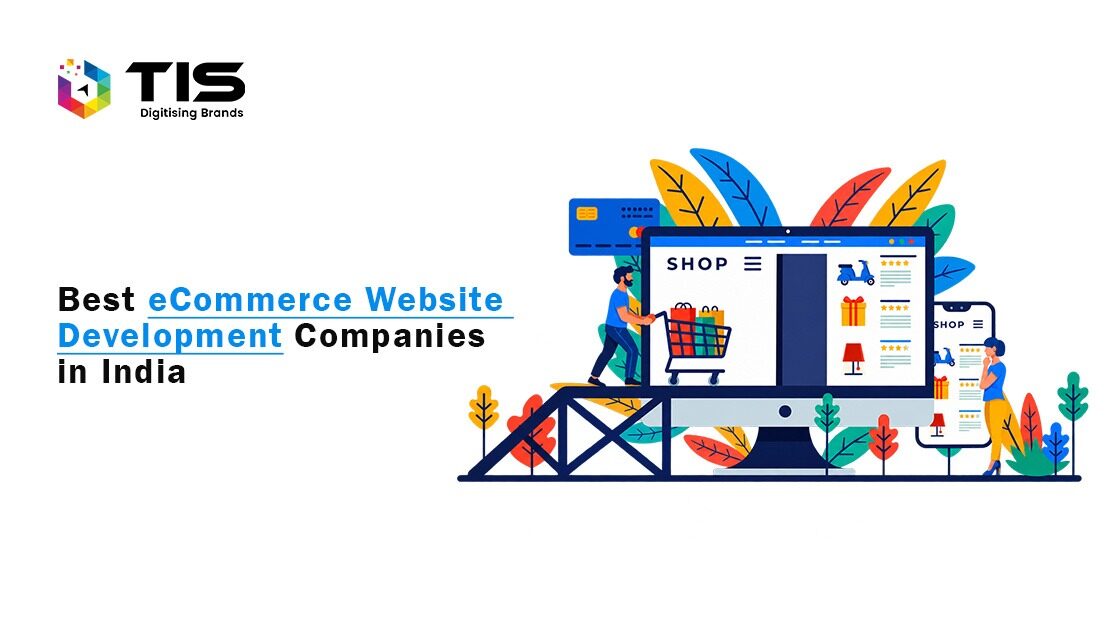
Choosing an eCommerce development partner in India can be hard because there are so many agencies. Most can launch an online store, but not all can keep it fast and secure as orders grow. This choice also matters more each year, since IBEF reports the industry is expected “to reach Rs. 27.28 lakh crore (US$ 300 billion) by 2030 from 2025.” To help you choose, this guide lists eight companies and what each one suits. It then gives you six checks to run before you hire. TIS India wrote this guide and is one of the eight companies, so please confirm each claim yourself.
Table of Contents
The best company for you depends on the kind of store you run. For example, a marketplace needs different skills than a single-brand store. The table below shows the type of project each company suits, in no particular order.
| Company | Base | Best fit | Platform focus |
|---|---|---|---|
| TIS India | Noida | Store build and SEO together | Shopify, Magento, WooCommerce, BigCommerce |
| PixelCrayons | Noida | Moving to a new platform | Shopify, WooCommerce, Magento |
| OrangeMantra | Gurugram | Stores connected to an ERP | Magento, Shopify Plus |
| Ziffity Solutions | Plano, Chennai | Large B2B stores | Adobe Commerce, Shopify Plus, BigCommerce |
| Emizen Tech | Jaipur | Startups and small businesses | Shopify, Magento, WooCommerce |
| Mobikasa | New Delhi, New York | Mobile-first retail stores | Shopify, Magento |
| Webnexs | Chennai | Marketplaces with many sellers | Custom marketplace builds |
| BrainSpate | Ahmedabad | D2C brands | Shopify, Magento, WooCommerce |
The notes below add detail to the table by quoting each company’s own website. Since these are the companies’ own statements, check them with client references.
TIS India says it has “completed over 1500 projects for our 1000+ clients across the globe.” Its eCommerce website development services include shopping cart development, payment gateway integration, and maintenance. TIS India also offers eCommerce SEO, so you can plan the store and its search visibility together.
For platform moves, PixelCrayons says, “Before anything switches, we list products, customers, orders and every web address that ever ranked.” This matters because a store can lose rankings if its old pages are not mapped to new ones.
OrangeMantra connects online stores to business systems such as SAP. Its website describes its work for Eicher as “Deep SAP integration for real-time inventory management across the distributor network.” This connection helps a store show correct stock levels.
Ziffity says, “we provide end-to-end eCommerce services for enterprise brands.” This focus suits B2B eCommerce development, where a store often needs custom pricing and order approvals.
Emizen Tech says its services run “from custom software and mobile apps to enterprise eCommerce, CRM, ERP, and dedicated engineering teams.” This range lets a small business start with a store and add other systems later.
Mobikasa describes its app work as “High-performance apps built for intuitive use and scalability.” Because many shoppers buy on phones, ask to see test results from real mobile devices.
Webnexs focuses on multi-vendor marketplace development, where many sellers share one platform. Its website says, “Payouts run on a schedule you define, with adjustments for refunds and returns.” Payout rules like this are a key difference from a single-brand store.
The BrainSpate website says, “BrainSpate keeps your store up-to-date, ensuring continued stability, and security.” This matters to a D2C brand because a small team may not have its own developer.
The notes above show what each company offers, but not how its team handles problems. These six checks help you test that, so ask every company the same questions.
The right platform depends on your team, products, and budget. Choose it before you choose a company, because each company works best on certain platforms. For more detail, read our guide to evaluating eCommerce platforms or our Shopify vs WooCommerce comparison.
| Your situation | Likely fit | Trade-off |
|---|---|---|
| Fast launch with a small team | Shopify or Shopify Plus | Less control |
| Your brand already uses WordPress | WooCommerce | You manage hosting |
| Many products and B2B pricing rules | Magento or Adobe Commerce | Higher cost |
| Custom front end across channels | Headless commerce | Two systems to run |
| Processes no platform supports | Custom eCommerce development | Longest build |
Your store is ready for AI search when AI tools can easily read and understand your pages. To prepare, make sure search tools can access your pages. Your pages also need product schema, which is code that labels details such as price and stock. These items are easier to add during the build, so include them in your project scope. Our guide on GEO for eCommerce product pages explains the steps.
Once you know your platform and your questions, follow these four steps.
After these steps, choose the company that gave the clearest answers and showed proof of its work.
If you would like help planning a new store or moving an existing one, you can share your details with the TIS India eCommerce team.
eCommerce website development cost in India depends on your platform, number of products, integrations, and design. As one example, TIS India says a basic store “would probably cost you somewhere between $5000 and $20000.” A marketplace or a store connected to an ERP will usually cost more. You should also budget for hosting, apps, and maintenance, because these costs continue after launch.
A template-based store with a standard checkout can launch in a few weeks. A store with custom design and key integrations usually takes a few months. A large store connected to an ERP can take longer. The main cause of delay is late input, such as product data or system access. You can avoid this by preparing those items early.
You should repair your store if the platform still suits your business and the problems are limited to speed, checkout, or design. You should rebuild it if the platform or code stops you from adding features you need. A rebuild also makes sense when repairs would cost almost as much as a new store. An independent audit can help you decide.
Post-launch support should include security updates, platform and app updates, bug fixes, speed monitoring, and backups. It should also state how quickly the team will respond to a problem. The agreement should also name a contact for urgent issues. You should also confirm how many hours the monthly fee covers and what counts as new work. This helps you avoid surprise costs.
Yes, US and European brands can hire eCommerce teams in India, and many Indian agencies work with overseas clients. The time difference also means the team can work while your office is closed. However, the team should understand your local taxes, payment methods, and privacy rules, such as GDPR in Europe. You should also agree on a contact person during your business hours.
7 Reasons Why Internet Marketing Is Important For Your Business
Top Advantages of Using WordPress for Developing Business Website


 1


 (+91) 9811747579